
Dr. Martin Luther King Jr.
A historical tribute honoring the faith, courage, leadership, sacrifice, and enduring legacy of one of the most influential voices for justice, equality, and nonviolence in American history.
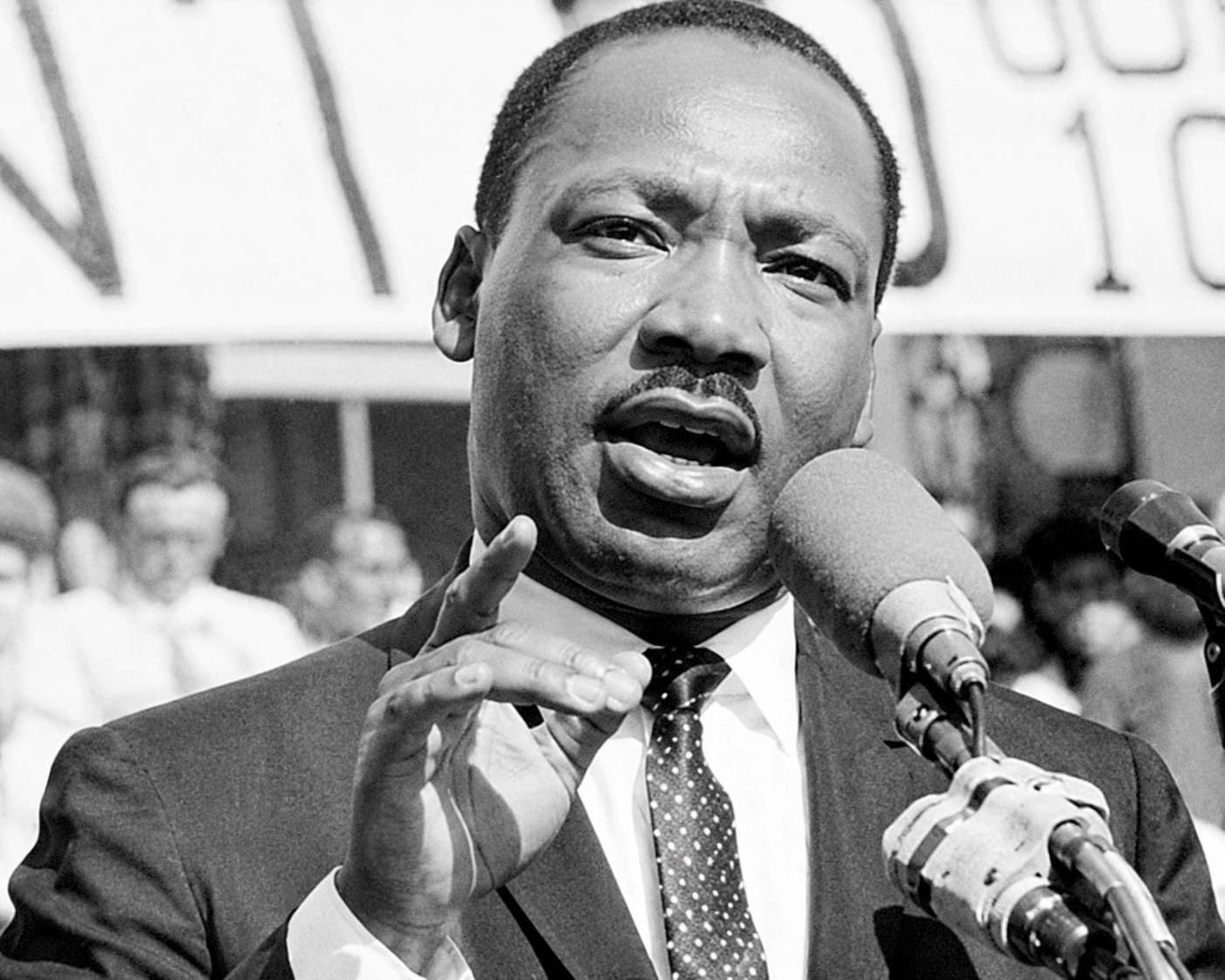
Dr. Martin Luther King Jr.: A Legacy of Faith, Courage & Equality
Dr. Martin Luther King Jr. was a Baptist minister, civil rights leader, husband, father, visionary, and one of the most powerful moral voices of the twentieth century. His life’s work helped transform the conscience of a nation and continues to inspire people around the world to pursue justice, equality, peace, dignity, and nonviolent change.
Born on January 15, 1929, in Atlanta, Georgia, Dr. King grew up during a time of segregation and racial injustice. Yet through faith, education, courage, and conviction, he rose to become a central leader of the modern Civil Rights Movement. His voice challenged America to live up to its highest promises and reminded the world that love, truth, justice, and nonviolence could become instruments of lasting change.
Early Life & Education
Martin Luther King Jr. was born Michael King Jr. in Atlanta, Georgia, to Rev. Martin Luther King Sr. and Alberta Williams King. He was raised in a family deeply rooted in faith, service, education, and the Black church tradition. His father and grandfather were both ministers, and the church played a major role in shaping his spiritual foundation and public calling.
Dr. King attended Morehouse College, where he was influenced by leaders and educators who helped shape his understanding of ministry, justice, and social responsibility. He later studied theology at Crozer Theological Seminary and earned his doctorate from Boston University. His education strengthened the moral, philosophical, and theological foundation that would guide his leadership in the years ahead.
Ministry & Leadership
Dr. King served as pastor of Dexter Avenue Baptist Church in Montgomery, Alabama. His ministry was never limited to the pulpit. He believed faith should move beyond words and become action. His preaching, teaching, and leadership called people to confront injustice with courage while refusing to surrender to hatred.
As a minister, Dr. King grounded his work in Christian faith, love, forgiveness, sacrifice, and the belief that every human being carries God-given dignity. His leadership helped bridge faith and social justice, showing that the fight for civil rights was not merely political, but deeply moral and spiritual.
The Montgomery Bus Boycott
In 1955, after Rosa Parks was arrested for refusing to give up her seat on a segregated bus, Dr. King became a leading voice in the Montgomery Bus Boycott. The boycott lasted more than a year and became one of the most significant early victories of the Civil Rights Movement.
Through the boycott, Dr. King emerged as a national leader. His commitment to nonviolent resistance helped set the tone for a movement that would challenge segregation, discrimination, and racial injustice across the United States.
The Civil Rights Movement
Dr. King helped lead and inspire major campaigns for voting rights, desegregation, equal access, fair treatment, and human dignity. He became one of the founders and leaders of the Southern Christian Leadership Conference, an organization committed to advancing civil rights through nonviolent protest and moral leadership.
His work included marches, boycotts, speeches, demonstrations, and direct action campaigns. He endured threats, arrests, criticism, surveillance, violence, and personal sacrifice, yet he continued to preach and practice nonviolence.
Faith
Dr. King’s leadership was deeply rooted in Christian conviction, moral courage, and the belief that justice is part of God’s concern for humanity.
Nonviolence
He taught that nonviolence was not weakness, but disciplined strength guided by love, truth, courage, and the pursuit of justice.
Justice
His work challenged segregation, racism, poverty, inequality, and the systems that denied people dignity and opportunity.
Legacy
His words and actions continue to inspire movements for civil rights, human rights, peace, and equality across the world.
The March on Washington
On August 28, 1963, Dr. King delivered his historic “I Have a Dream” speech during the March on Washington for Jobs and Freedom. Standing before a massive crowd at the Lincoln Memorial, he spoke of a future where people would not be judged by the color of their skin, but by the content of their character.
That speech became one of the most recognized speeches in American history. It captured the pain, hope, faith, and vision of the Civil Rights Movement and helped move the nation closer toward major civil rights legislation.
Nobel Peace Prize
In 1964, Dr. Martin Luther King Jr. received the Nobel Peace Prize for his leadership in the struggle for civil rights through nonviolent action. At age thirty-five, he became one of the youngest recipients of the Nobel Peace Prize at that time.
Rather than using the honor for personal gain, Dr. King dedicated the recognition and prize money to the continued work of the Civil Rights Movement. His Nobel Peace Prize affirmed the global significance of his message and the power of nonviolence as a force for social change.
Major Accomplishments
- Served as a Baptist minister and civil rights leader
- Helped lead the Montgomery Bus Boycott
- Helped establish the Southern Christian Leadership Conference
- Advocated for nonviolent resistance and civil disobedience
- Delivered the historic “I Have a Dream” speech in 1963
- Received the Nobel Peace Prize in 1964
- Helped bring national attention to segregation, voting rights, poverty, and racial injustice
- Inspired generations of leaders, activists, ministers, educators, and communities worldwide
Historical Timeline
- 1929: Born in Atlanta, Georgia.
- 1948: Graduated from Morehouse College.
- 1955: Became a leader in the Montgomery Bus Boycott.
- 1957: Helped form the Southern Christian Leadership Conference.
- 1963: Delivered the “I Have a Dream” speech at the March on Washington.
- 1964: Received the Nobel Peace Prize.
- 1965: Helped bring national attention to the struggle for voting rights.
- 1968: Assassinated in Memphis, Tennessee, while supporting striking sanitation workers.
Family, Faith & Personal Sacrifice
Behind the public leader was a man with a family, a calling, and a tremendous burden. Dr. King was married to Coretta Scott King, who became a powerful civil rights leader and keeper of his legacy in her own right. Together, they raised children while living under constant pressure, threats, and public scrutiny.
Dr. King’s work required deep sacrifice. He was arrested multiple times, threatened often, and criticized by both opponents and those who believed he was moving too quickly. Still, he continued to lead with faith, courage, discipline, and conviction.
His Final Days
In 1968, Dr. King traveled to Memphis, Tennessee, to support striking sanitation workers who were demanding fair treatment and dignity. His presence there reflected his widening concern for economic justice, workers’ rights, and the struggles of the poor.
On April 4, 1968, Dr. King was assassinated in Memphis. His death shook the nation and the world, but his message did not die. His words, witness, and work continued to move through history, inspiring future generations to confront injustice with courage and hope.
Legacy & Impact Today
Dr. Martin Luther King Jr.’s legacy continues to shape conversations about justice, equality, voting rights, poverty, peace, education, faith, leadership, and human dignity. His life reminds us that one voice, surrendered to truth and strengthened by courage, can awaken a nation.
His legacy is not preserved only in monuments, holidays, speeches, or history books. It lives whenever people choose courage over fear, love over hatred, justice over silence, and service over selfishness.
Lessons From His Legacy
- A life of purpose can impact generations.
- Faith can become a force for justice and healing.
- Nonviolence requires courage, discipline, and strength.
- True leadership often requires sacrifice.
- Every person has dignity, value, and a story worth honoring.
- Legacy is not measured only by years lived, but by the lives touched.
A Sacred Legacy Reflection
Dr. Martin Luther King Jr. left behind more than speeches. He left a moral inheritance. He left a vision. He left a testimony of faith in action. He left a reminder that justice requires courage, love requires sacrifice, and legacy requires purpose.
At Sacred Legacy Memorial Concierge, we believe every life carries meaning. Dr. King’s life reminds us that a legacy can outlive the person, continue speaking after death, and inspire generations not yet born.
Preserve Your Family Legacy
Every family has stories, memories, milestones, photographs, values, and history worth preserving. Sacred Legacy Memorial Concierge creates custom memorial books, obituary designs, tribute publications, and legacy preservation keepsakes that honor loved ones with dignity, beauty, and care.
Preserve Your Family Legacy