
John F. Kennedy
A historical tribute honoring the life, leadership, courage, public service, vision, and enduring legacy of the 35th President of the United States.
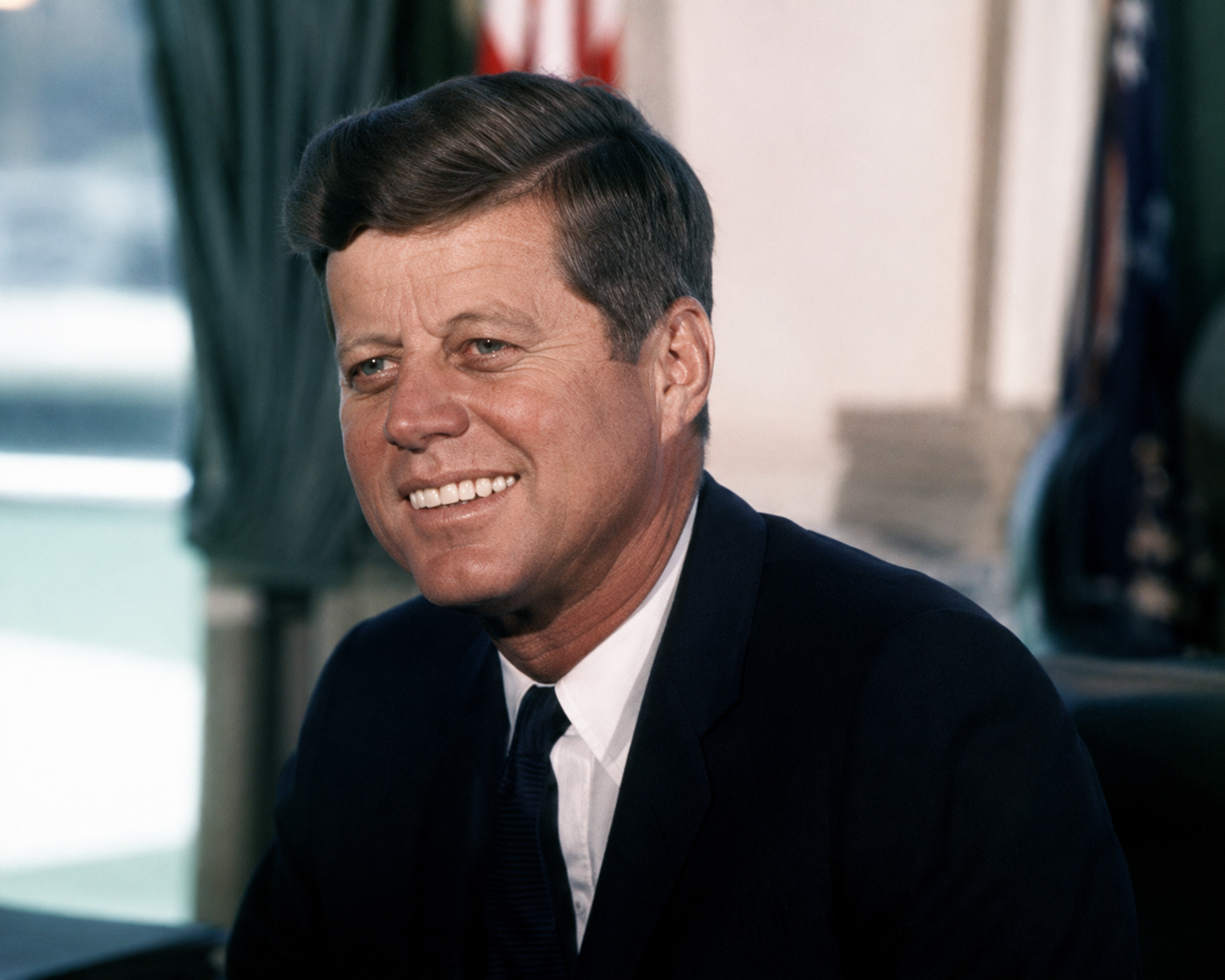
John F. Kennedy: A Legacy of Courage, Vision & Public Service
John Fitzgerald Kennedy, often remembered as JFK, was a husband, father, naval officer, author, senator, president, and one of the most recognized leaders in American history. As the 35th President of the United States, Kennedy represented a new generation of leadership and inspired millions with his call to courage, service, sacrifice, and national purpose.
Born on May 29, 1917, in Brookline, Massachusetts, Kennedy came from a family deeply involved in public life. His story was shaped by education, war, faith, family expectation, personal hardship, political service, and a powerful belief that leadership required both responsibility and vision.
Early Life & Family Roots
John F. Kennedy was born into the prominent Kennedy family, the son of Joseph P. Kennedy Sr. and Rose Fitzgerald Kennedy. He grew up in a household that emphasized education, competition, discipline, faith, ambition, and public responsibility.
Although Kennedy was born into privilege, his early life was also marked by health struggles and personal challenges. These difficulties helped shape his resilience and strengthened his determination to live a life of purpose despite physical hardship.
Education & Formation
Kennedy attended Harvard University, where he developed an interest in government, international affairs, history, and world leadership. His senior thesis focused on Britain’s foreign policy before World War II and was later published as the book Why England Slept.
His education prepared him for a life in public service and helped shape his understanding of diplomacy, national security, global responsibility, and the importance of informed leadership during difficult times.
World War II Service
During World War II, John F. Kennedy served in the United States Navy. He commanded PT-109, a patrol torpedo boat in the Pacific. In 1943, PT-109 was struck by a Japanese destroyer, leaving Kennedy and his surviving crew members in a life-threatening situation.
Despite injury and danger, Kennedy helped lead his men to safety. His bravery and leadership during the PT-109 ordeal became one of the defining stories of his life and contributed to his public image as a man of courage under pressure.
Beginning a Life in Public Service
After the war, Kennedy entered politics. He was elected to the United States House of Representatives in 1946 and later served as a United States Senator from Massachusetts. His political career reflected his growing national influence and his ability to connect with citizens across generations.
Kennedy’s public service was shaped by his belief that government could be a force for progress, national strength, and human dignity. His speeches often called Americans to look beyond personal comfort and consider their responsibility to the nation and the world.
35th President of the United States
In 1960, John F. Kennedy was elected President of the United States. At age 43, he became the youngest person elected to the presidency and the first Catholic president in American history. His election represented a major generational shift in national leadership.
His inaugural address became one of the most famous speeches in American political history, especially his call for citizens to ask what they could do for their country. That message became a defining expression of his presidency and continues to be remembered as a call to service.
The New Frontier
Kennedy’s domestic vision was known as the New Frontier. It reflected his desire to move the nation toward progress in education, civil rights, economic opportunity, science, space exploration, and public service.
He believed America had a responsibility to lead with strength, innovation, and moral purpose. His leadership encouraged citizens to imagine a better future and participate in shaping it.
The Peace Corps
One of Kennedy’s lasting contributions was the creation of the Peace Corps. Established in 1961, the Peace Corps gave Americans the opportunity to serve in communities around the world, promoting education, health, development, understanding, and goodwill.
The Peace Corps reflected Kennedy’s belief that service should extend beyond national borders and that ordinary citizens could become ambassadors of compassion, skill, and hope.
The Space Race & A Vision Beyond the Earth
Kennedy boldly challenged the United States to land a man on the moon before the end of the 1960s. His vision helped accelerate America’s space program and inspired scientific innovation, engineering achievement, and national imagination.
Although Kennedy did not live to see the moon landing, his leadership helped set the course for one of humanity’s greatest technological achievements. His space vision remains one of the most powerful examples of leadership that looks beyond the present and calls a nation toward what seems impossible.
Civil Rights & Moral Responsibility
During Kennedy’s presidency, the Civil Rights Movement was bringing national attention to segregation, racial injustice, voting rights, and the demand for equal protection under the law. Kennedy’s administration faced some of the most difficult moral and political questions of the era.
In 1963, Kennedy called civil rights a moral issue and urged the nation to confront racial inequality. His support helped lay the groundwork for civil rights legislation that would continue after his death.
Leadership During Crisis
Kennedy’s presidency was marked by major international challenges, including Cold War tensions, the Bay of Pigs invasion, the Berlin Crisis, and the Cuban Missile Crisis. The Cuban Missile Crisis in 1962 brought the United States and the Soviet Union dangerously close to nuclear conflict.
Kennedy’s leadership during that crisis required restraint, strategy, courage, and careful diplomacy. His handling of the crisis remains one of the most studied examples of presidential decision-making under extreme pressure.
Major Accomplishments
- Served as the 35th President of the United States from 1961 to 1963
- Served as a United States Navy officer during World War II
- Demonstrated heroic leadership during the PT-109 incident
- Served in the United States House of Representatives
- Served as a United States Senator from Massachusetts
- Became the youngest person elected President of the United States
- Became the first Catholic president in American history
- Established the Peace Corps
- Challenged America to pursue the goal of landing a man on the moon
- Led the nation through the Cuban Missile Crisis
- Advanced national conversations around civil rights, public service, science, and global responsibility
Historical Timeline
- 1917: Born on May 29 in Brookline, Massachusetts.
- 1940: Graduated from Harvard University.
- 1941–1945: Served in the United States Navy during World War II.
- 1943: Commanded PT-109 and helped lead survivors to safety after the boat was destroyed.
- 1946: Elected to the United States House of Representatives.
- 1952: Elected United States Senator from Massachusetts.
- 1953: Married Jacqueline Bouvier Kennedy.
- 1960: Elected President of the United States.
- 1961: Took office as the 35th President and established the Peace Corps.
- 1962: Led the nation through the Cuban Missile Crisis.
- 1963: Delivered major remarks on civil rights as a moral issue.
- 1963: Assassinated on November 22 in Dallas, Texas.
Family, Faith & Personal Life
John F. Kennedy married Jacqueline Bouvier Kennedy in 1953. Together, they became one of the most recognized presidential families in American history. Jacqueline Kennedy brought elegance, cultural appreciation, and historical awareness to the White House, helping shape what many later remembered as the “Camelot” era.
Kennedy was also a father, and his young family became deeply connected to the public memory of his presidency. His Catholic faith was a historic part of his identity, especially during a time when religious prejudice remained a concern in national politics.
Assassination & National Mourning
On November 22, 1963, President John F. Kennedy was assassinated in Dallas, Texas. His death shocked the nation and the world. Millions mourned not only the loss of a president, but the sudden end of a young administration filled with ambition, possibility, and promise.
The images of national grief, the funeral procession, the salute of young John F. Kennedy Jr., and the dignified strength of Jacqueline Kennedy became lasting moments in American memory.
Legacy & Impact Today
John F. Kennedy’s legacy continues to shape American culture, political memory, public service, leadership, diplomacy, and national imagination. He is remembered for his eloquence, courage, charisma, intellectual curiosity, and ability to inspire people toward service and sacrifice.
His life reminds us that leadership is not only about holding office. It is about calling people to purpose, facing crises with courage, and leaving behind a vision that continues to challenge future generations.
Lessons From His Legacy
- Public service requires sacrifice, courage, and responsibility.
- Visionary leadership can inspire generations beyond a single lifetime.
- Courage is often revealed during crisis.
- A nation’s future is shaped by citizens willing to serve.
- Legacy is built through words, actions, values, and the ability to inspire others.
- Even a short life can leave an enduring mark on history.
A Sacred Legacy Reflection
John F. Kennedy’s life was marked by ambition, service, courage, and vision. From wartime service to the presidency, he carried a belief that leadership should call people higher. His words continue to echo because they asked Americans to think beyond themselves and participate in building a better world.
His presidency was brief, but his legacy remains powerful. He showed that the measure of a life is not only how long it lasts, but how deeply it inspires, challenges, and influences others.
At Sacred Legacy Memorial Concierge, we believe every life tells a story. Historical tributes like this remind us that legacies are preserved not only through dates and achievements, but through courage, service, vision, sacrifice, and the impact a person leaves behind.