
Bass Reeves
A historical tribute honoring the legendary frontier lawman, trailblazer, Deputy U.S. Marshal, and one of the most remarkable figures in American law enforcement history.
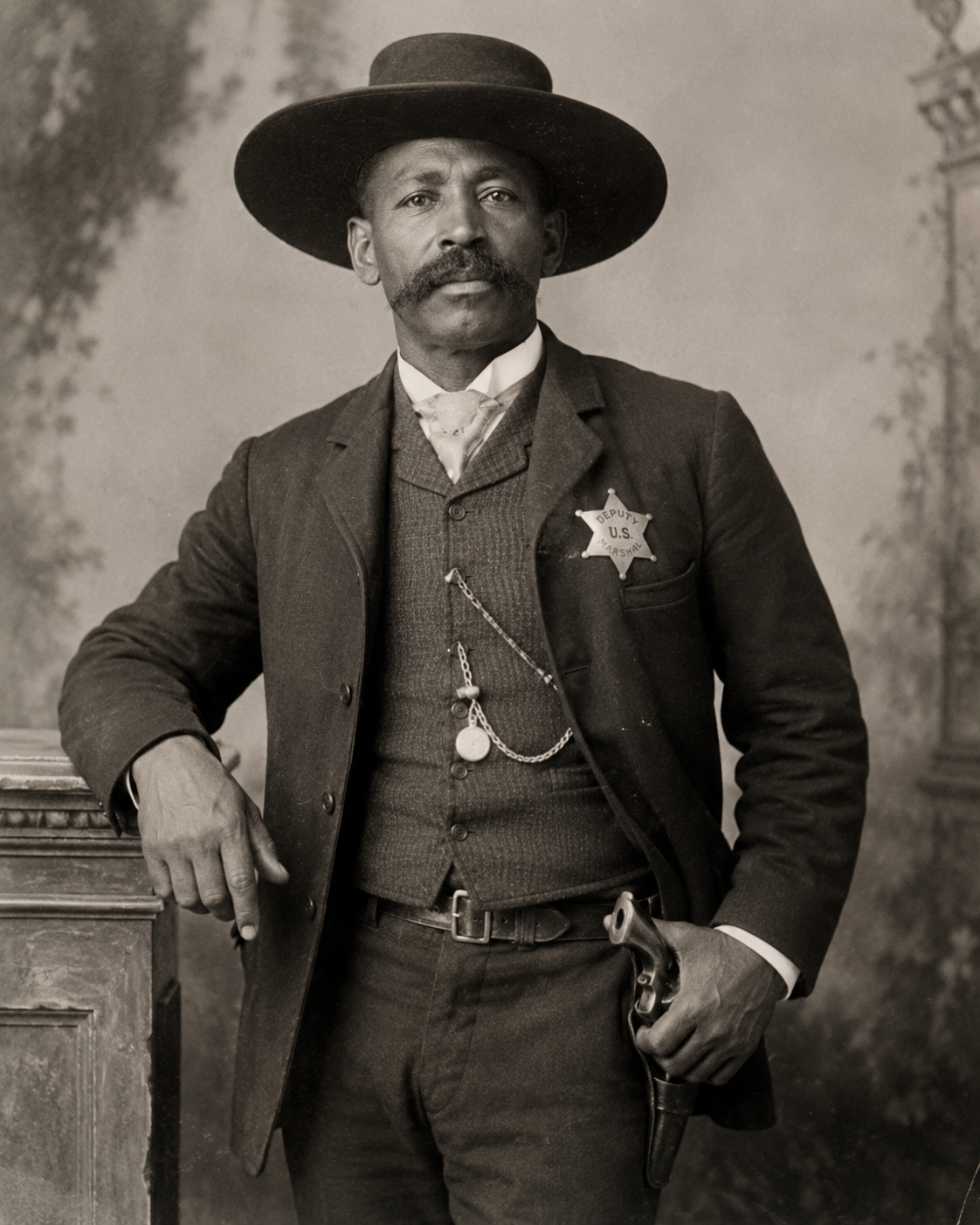
Bass Reeves: A Legacy of Courage, Justice & Unbreakable Character
Bass Reeves was a legendary lawman, frontiersman, husband, father, marksman, tracker, and one of the most extraordinary Deputy U.S. Marshals in American history. Born into slavery and rising to become one of the most respected law enforcement officers of the Old West, Reeves’ life stands as a powerful testimony of courage, discipline, integrity, and perseverance.
His story reaches far beyond frontier legend. Bass Reeves served in one of the most dangerous territories in the United States, pursued violent outlaws, crossed racial barriers, enforced the law with remarkable fairness, and built a reputation for honesty that endured long after his death.
Early Life & Enslavement
Bass Reeves was born in July 1838 in Crawford County, Arkansas. He was born into slavery during a time when Black Americans were denied freedom, legal protection, education, and basic human dignity. Despite beginning life under oppression, Reeves would eventually rise to a level of respect and authority that made him one of the most admired lawmen of the American frontier.
During the Civil War era, Reeves was taken into Texas by his enslaver. Historical accounts indicate that he later escaped and lived for a time in Indian Territory, now present-day Oklahoma. This period helped shape the skills that would later make him a legendary Deputy U.S. Marshal.
Life in Indian Territory
After escaping slavery, Bass Reeves spent time among Native communities in Indian Territory. During those years, he became deeply familiar with the land, trails, terrain, languages, customs, and survival skills needed to navigate one of the most challenging regions of the frontier.
He reportedly learned several Native languages and developed exceptional abilities as a tracker, horseman, marksman, and outdoorsman. These skills later became invaluable in law enforcement, allowing him to pursue fugitives across difficult and dangerous country where many others could not succeed.
Freedom, Family & A New Beginning
Following emancipation, Bass Reeves began building his life as a free man. He married, raised a large family, farmed, and became known for his discipline, strength, intelligence, and character. His knowledge of Indian Territory, combined with his language skills and reputation for courage, eventually brought him to the attention of federal authorities.
Reeves’ life after slavery was not simply a story of survival. It was a story of transformation. He took the skills formed in hardship and used them to build a legacy of public service, justice, and honor.
Becoming a Deputy U.S. Marshal
In 1875, Bass Reeves was appointed as a Deputy U.S. Marshal under Judge Isaac C. Parker, the federal judge known as the “Hanging Judge.” Reeves became one of the first Black Deputy U.S. Marshals west of the Mississippi River.
His appointment was historic, but his service is what made him legendary. Reeves was assigned to patrol Indian Territory, a region known for outlaws, fugitives, violence, and lawlessness. It was dangerous work that required intelligence, courage, patience, and a deep understanding of the land.
A Legendary Law Enforcement Career
Bass Reeves served as a Deputy U.S. Marshal for more than three decades. During his career, he reportedly arrested more than 3,000 fugitives. He became known for his ability to track criminals across vast territory, use disguises when necessary, and bring dangerous men to justice without compromising his principles.
Reeves was respected because he was effective, fearless, and fair. He could not read or write fluently, but he memorized warrants and could identify the people he was sent to arrest. His discipline, memory, and determination made him one of the most successful lawmen of the frontier.
Courage Under Fire
Serving as a Deputy U.S. Marshal in Indian Territory was extremely dangerous. Reeves faced armed fugitives, ambushes, rough terrain, racial prejudice, and the constant threat of death. Yet he continued to serve with courage and determination.
He survived numerous dangerous encounters and became known as a man who could not easily be intimidated. His reputation alone often carried weight. Outlaws understood that if Bass Reeves had a warrant, he intended to complete the mission.
A Man of Integrity
One of the most powerful stories connected to Bass Reeves involves the arrest of his own son. When a warrant was issued for his son, Reeves reportedly accepted the responsibility and carried out the arrest himself. That painful act demonstrated the depth of his commitment to justice and the principle that no one was above the law.
This moment remains one of the clearest examples of Reeves’ character. His badge was not a symbol of convenience. It represented duty, law, fairness, and accountability, even when the cost was personal.
Major Accomplishments
- Born into slavery and rose to become one of the most respected lawmen of the American frontier
- Appointed as a Deputy U.S. Marshal in 1875
- Recognized as one of the first Black Deputy U.S. Marshals west of the Mississippi River
- Served for more than thirty years in federal law enforcement
- Reportedly arrested more than 3,000 fugitives during his career
- Became known for his tracking skills, marksmanship, courage, and use of disguises
- Maintained a reputation for honesty, discipline, fairness, and integrity
- Helped bring law and order to one of the most dangerous regions of the American frontier
- Inspired generations of law enforcement officers, historians, writers, and descendants
Historical Timeline
- 1838: Born in Crawford County, Arkansas.
- 1860s: Escaped slavery during the Civil War era and lived in Indian Territory.
- After Emancipation: Built a life as a free man, husband, father, farmer, and skilled frontiersman.
- 1875: Appointed as a Deputy U.S. Marshal under Judge Isaac C. Parker.
- 1875–1907: Served across Indian Territory, pursuing outlaws and fugitives.
- 1907: Oklahoma became a state, and Reeves later served as a police officer in Muskogee.
- 1910: Passed away on January 12 in Muskogee, Oklahoma.
The Frontier He Served
The territory Bass Reeves served was vast, rugged, and often dangerous. Indian Territory attracted fugitives who believed they could hide beyond the reach of the law. Deputies traveled long distances by horseback, often with limited backup, harsh weather, and serious threats from armed criminals.
Reeves’ ability to navigate that environment made him exceptional. He understood the land, the people, the risks, and the patience required to pursue fugitives across remote regions. His service helped establish order in places where justice was difficult to enforce.
Skill, Strategy & Intelligence
Bass Reeves was not only brave; he was strategic. He was known to use disguises, careful planning, and patience to capture fugitives. His success came from more than physical strength. It came from wisdom, observation, discipline, and the ability to think ahead.
He could track suspects, gather information, manage dangerous confrontations, and bring people back alive to face the law. His career proves that true courage is not reckless. It is controlled, focused, and guided by purpose.
Breaking Barriers
Bass Reeves served at a time when racism, discrimination, and racial violence were deeply embedded in American society. As a Black lawman with federal authority, he stood in a rare and powerful position. His career challenged the assumptions and limitations that society tried to place on Black men during that era.
His life reminds us that history often contains heroes whose stories were overlooked, minimized, or delayed in being fully recognized. Today, Bass Reeves is increasingly honored as one of the greatest lawmen in American history.
Legacy & Impact Today
Bass Reeves’ legacy continues to grow as more people learn about his courage, service, and character. He represents a powerful part of Black history, Western history, law enforcement history, and American history. His life stands at the intersection of freedom, justice, resilience, and public service.
He is remembered as a man who rose from slavery to federal authority, from oppression to honor, from danger to distinction. His life continues to inspire law enforcement officers, historians, families, storytellers, and communities who recognize the importance of preserving overlooked legacies.
Lessons From His Legacy
- Greatness is not defined by where a person begins, but by the character they carry forward.
- Integrity means doing what is right, even when it is painful.
- Courage is not the absence of danger, but the commitment to duty despite danger.
- Justice requires fairness, discipline, and accountability.
- One life can reshape how history remembers an entire profession.
- Overlooked stories deserve to be recovered, preserved, and honored.
- A powerful legacy can rise from hardship, service, and unwavering principle.
A Sacred Legacy Reflection
Bass Reeves’ life reminds us that legacy is not limited by birth, circumstance, race, hardship, or the obstacles placed before a person. Born into slavery, he rose to become one of the most respected lawmen in American history. His story reflects strength, discipline, justice, courage, and unbreakable character.
His legacy continues to speak because it carries lessons that still matter: serve with integrity, stand for justice, honor your duty, and never allow the circumstances of your beginning to define the reach of your life.
At Sacred Legacy Memorial Concierge, we believe every life tells a story. Historical tributes like this remind us that some legacies are buried for a season, but when remembered and preserved, they rise again to educate, inspire, and strengthen future generations.