
Rosa Parks
A historical tribute honoring the courage, dignity, sacrifice, and enduring legacy of the woman whose quiet strength helped ignite the Montgomery Bus Boycott and inspire the Civil Rights Movement.
Rosa Parks: A Legacy of Courage, Dignity & Quiet Strength
Rosa Louise Parks was a civil rights activist, wife, seamstress, organizer, and one of the most recognized figures in American history. Known as the “Mother of the Civil Rights Movement,” her refusal to surrender her bus seat in Montgomery, Alabama, became a defining moment in the struggle against segregation and racial injustice.
Born on February 4, 1913, in Tuskegee, Alabama, Rosa Parks grew up during a time when segregation shaped nearly every part of daily life in the South. Yet through dignity, discipline, faith, and courage, she became a symbol of resistance whose legacy continues to inspire generations around the world.
Early Life & Education
Rosa Parks was raised in Alabama during the Jim Crow era, where laws enforced racial segregation and denied basic dignity to Black Americans. Her early experiences with injustice shaped her understanding of courage, equality, and the importance of standing firm even when the cost was great.
She attended school in Montgomery and later became deeply involved in civil rights work. Long before her famous bus protest, Rosa Parks had already developed a strong commitment to justice, community service, and the protection of human dignity.
Faith, Character & Personal Strength
Rosa Parks’ courage was not loud, impulsive, or careless. It was steady, disciplined, and deeply rooted in conviction. She carried herself with grace and dignity, but beneath her calm presence was a determined spirit that refused to accept injustice as normal.
Her life reminds us that strength does not always announce itself loudly. Sometimes strength sits still, refuses to move, and changes history.
Civil Rights Work Before the Bus
Before December 1955, Rosa Parks was already active in the fight for civil rights. She worked with the Montgomery chapter of the NAACP and helped document injustice, support legal cases, and advocate for equal treatment under the law.
Her activism was not limited to one moment on a bus. That moment became famous because it revealed the courage and commitment she had already been living for years.
The Montgomery Bus Protest
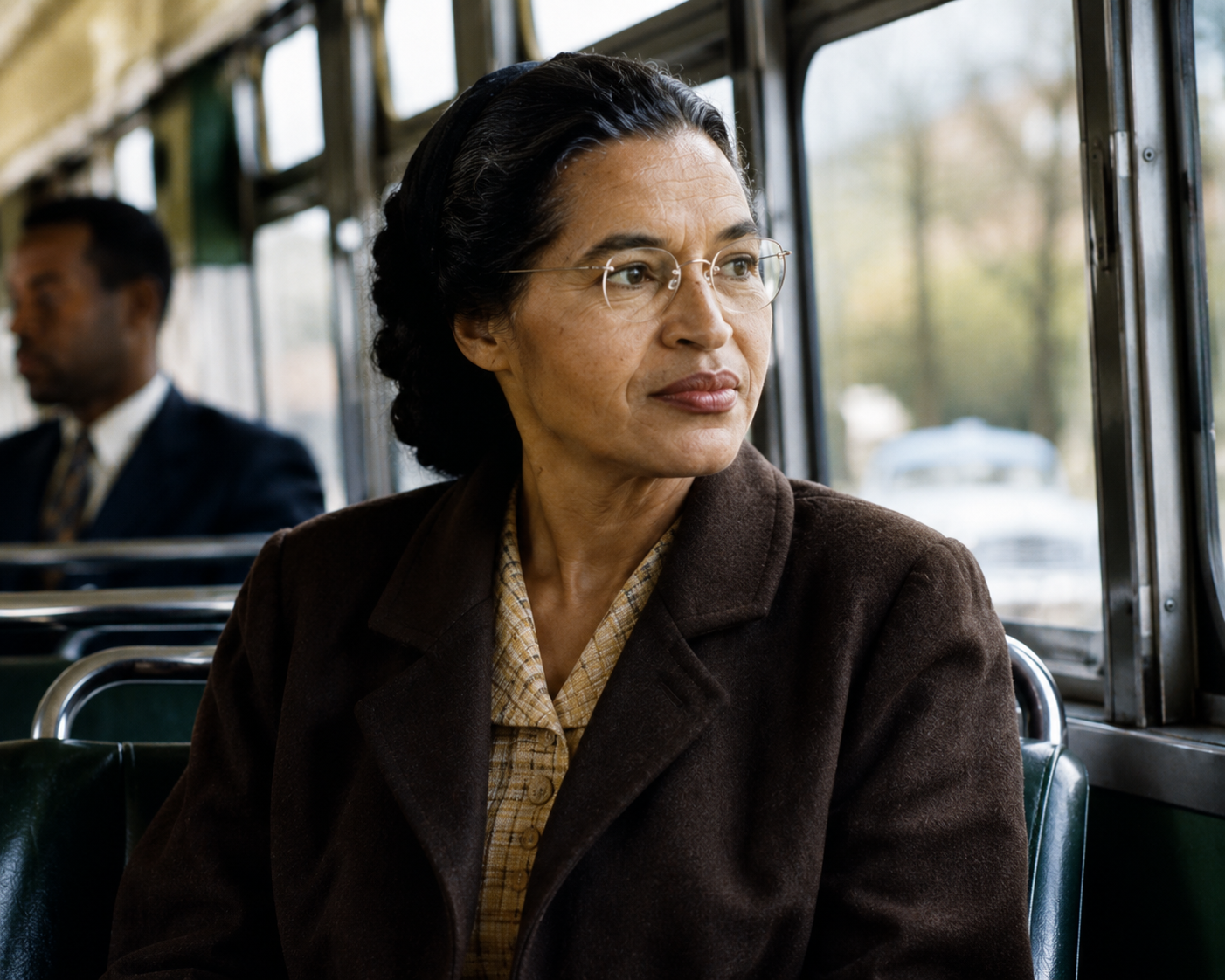
On December 1, 1955, Rosa Parks boarded a city bus in Montgomery, Alabama. When the bus became crowded, she was ordered to give up her seat to a white passenger. She refused. Her arrest became a turning point in American history.
Her act of resistance helped launch the Montgomery Bus Boycott, a coordinated protest that lasted more than a year. The boycott brought national attention to segregation and helped elevate leaders such as Dr. Martin Luther King Jr., while showing the power of organized, nonviolent protest.
Major Accomplishments
- Played a central role in the Montgomery Bus Boycott
- Helped inspire the modern Civil Rights Movement
- Served as an active member and organizer within the NAACP
- Became an international symbol of courage, dignity, and nonviolent resistance
- Received numerous honors for her contributions to civil rights and human dignity
- Continued advocating for justice, education, and equality throughout her life
- Left a legacy that continues to inspire movements for freedom and human rights
Historical Timeline
- 1913: Born in Tuskegee, Alabama.
- 1930s–1940s: Became involved in civil rights and community advocacy.
- 1943: Joined the Montgomery chapter of the NAACP.
- 1955: Refused to give up her bus seat in Montgomery, Alabama.
- 1955–1956: The Montgomery Bus Boycott helped challenge segregated bus laws.
- 1957: Moved to Detroit, Michigan, where she continued her work for justice.
- 1999: Received the Congressional Gold Medal.
- 2005: Passed away on October 24 in Detroit, Michigan.
The Montgomery Bus Boycott
The Montgomery Bus Boycott became one of the most important protests of the Civil Rights Movement. For more than a year, Black residents of Montgomery refused to ride city buses, choosing instead to walk, carpool, and organize together in pursuit of justice.
The boycott demonstrated the power of unity, sacrifice, faith, and organized nonviolent resistance. Rosa Parks’ arrest became the spark, but the movement grew through the courage of an entire community determined to demand change.
Legacy & Impact Today
Rosa Parks’ legacy continues to influence conversations about justice, civil rights, human dignity, voting rights, equality, and peaceful resistance. Her life reminds us that history can change when ordinary people choose extraordinary courage.
She is remembered not only for refusing to give up a seat, but for dedicating her life to the larger work of justice. Her courage continues to speak across generations, reminding people everywhere that dignity is worth defending.
Lessons From Her Legacy
- Courage does not have to be loud to be powerful.
- One faithful act can inspire a movement.
- Dignity should never be surrendered to injustice.
- Legacy is built through conviction, sacrifice, and service.
- Every person has the ability to make history by standing for what is right.
A Sacred Legacy Reflection
Rosa Parks’ life reflects the power of quiet strength. Her legacy was not built on fame, wealth, or position, but on courage, discipline, sacrifice, and an unwavering belief in human dignity.
At Sacred Legacy Memorial Concierge, we believe every life tells a story. Historical tributes like this remind us that legacies are preserved not only through dates and achievements, but through the values, decisions, sacrifices, and impact a person leaves behind.